
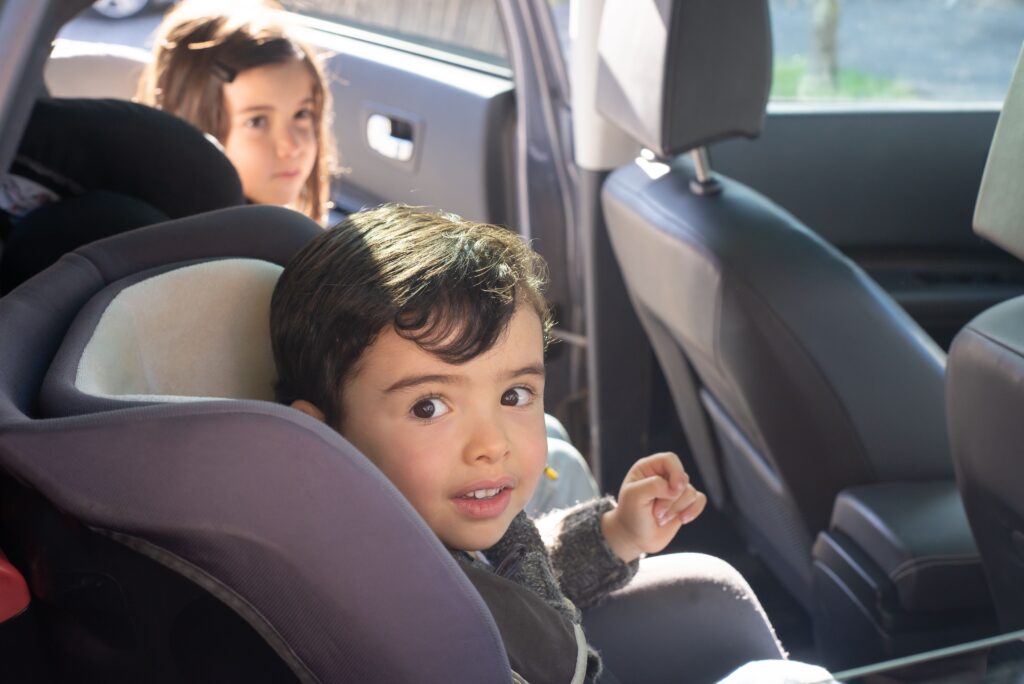
Can You Get Lice From a Car Seat? What Parents Actually Need to Know
If your child just came home with lice, it’s natural to start eyeing every headrest, carseat, and stuffed animal in the car with suspicion. The good news: the family car is one of the least likely places lice actually spread. Head lice almost always move from person to person through direct head-to-head contact, not through furniture or fabric.
That doesn’t mean it’s absolutely impossible for a stray louse or nit to end up on a headrest — it does mean it’s not something worth losing sleep, or a weekend, over. Here’s what actually happens to lice once they’re off a person, and what’s genuinely worth doing about your car.
How Lice Actually Spread
Head lice can’t jump or fly — they only crawl, and they need direct head-to-head contact to move from one person to another. That’s why lice spread most often during things like sleepovers, hugging, or kids’ heads bumping together during play, and only rarely through shared objects.
Public health guidance is consistent on this: indirect spread through furniture, hats, or car seats is possible in theory, but it’s uncommon enough that extensive cleaning of those surfaces isn’t considered necessary to prevent reinfestation.
Why Lice Can’t Set Up Shop in Your Car
Lice are obligate parasites — they need to feed on human blood every few hours to survive. Once off a scalp, adult lice typically die within about a day or two, and newly hatched lice die even faster, often within a day. A headrest simply isn’t an environment where lice can survive for long, let alone multiply.
What About a Stray Nit in the Car?
Nits (lice eggs) are a little different — they can technically last longer off the head than live lice. But nits need the steady warmth of a scalp to hatch. Away from that warmth, they rarely hatch at all and usually die before reaching maturity. A nit that ends up on a headrest is, in practice, a dead end, not a new infestation waiting to happen.
Do You Need to Deep-Clean the Car?
Not really. A normal vacuum of the seats and floor mats is a perfectly reasonable, low-effort precaution if it puts your mind at ease, but you don’t need to bag up carseats, spray the interior, or keep kids out of the car for days. That kind of effort is much better spent on the one thing that actually matters:
Treating the person, not the car. Since lice need a scalp to survive, clearing the actual infestation is what stops the spread — not how thoroughly you clean the family car.
Common Myths About Lice and Cars
- “Lice can live in a car for weeks.” Not true — without a blood meal, lice die within a day or two.
- “You need to replace the carseat.” Unnecessary. A vacuum and, if you’d like, a wipe-down of hard surfaces is more than enough.
- “Spraying insecticide in the car helps.” Not recommended — it’s an unnecessary chemical exposure for a transmission route that’s already very low-risk.
- “A nit on the headrest means a new infestation is coming.” Very unlikely — nits need scalp warmth to hatch and rarely survive without it.
Where to Focus Instead: Treating the Actual Infestation
If your child has lice, the fastest way to stop it from coming back — in the car, at home, or anywhere else — is clearing it at the source. A professional lice removal visit can remove both lice and nits from the scalp in a single appointment using chemical-free methods, which does far more to stop transmission than any amount of car cleaning.
- Scalp check: a technician confirms lice and gauges how widespread it is
- Sectioning: hair is divided into small sections for a thorough pass
- Comb-out: each section is combed to remove both lice and nits
- Final check: the scalp is inspected once more before your child is cleared
Most kids leave lice-free after a single appointment — after that, your car really doesn’t need anything more than its usual vacuum.
Frequently Asked Questions
Can my child still ride in the car if they have lice?
Yes. Lice need head-to-head contact to spread, so riding in the car isn’t a meaningful risk to other passengers as long as heads aren’t in direct contact.
Do I need to bag up carseats or car toys?
No. That precaution is more useful for pests that survive long-term off a host. Lice don’t fall into that category — a normal clean is enough.
If it’s not the car, how did my child actually get lice?
Almost always through direct head-to-head contact — a sleepover, a hug, playing closely with a friend or classmate who has lice. It’s rarely about any single object or surface.