
Head Lice Support for School Nurses
School nurses play a critical role in managing head lice outbreaks. While lice aren’t dangerous, they are disruptive, and schools need clear policies and effective communication to stop the spread. Professional lice checks and easy-to-understand resources help schools support families while keeping classrooms focused on learning.
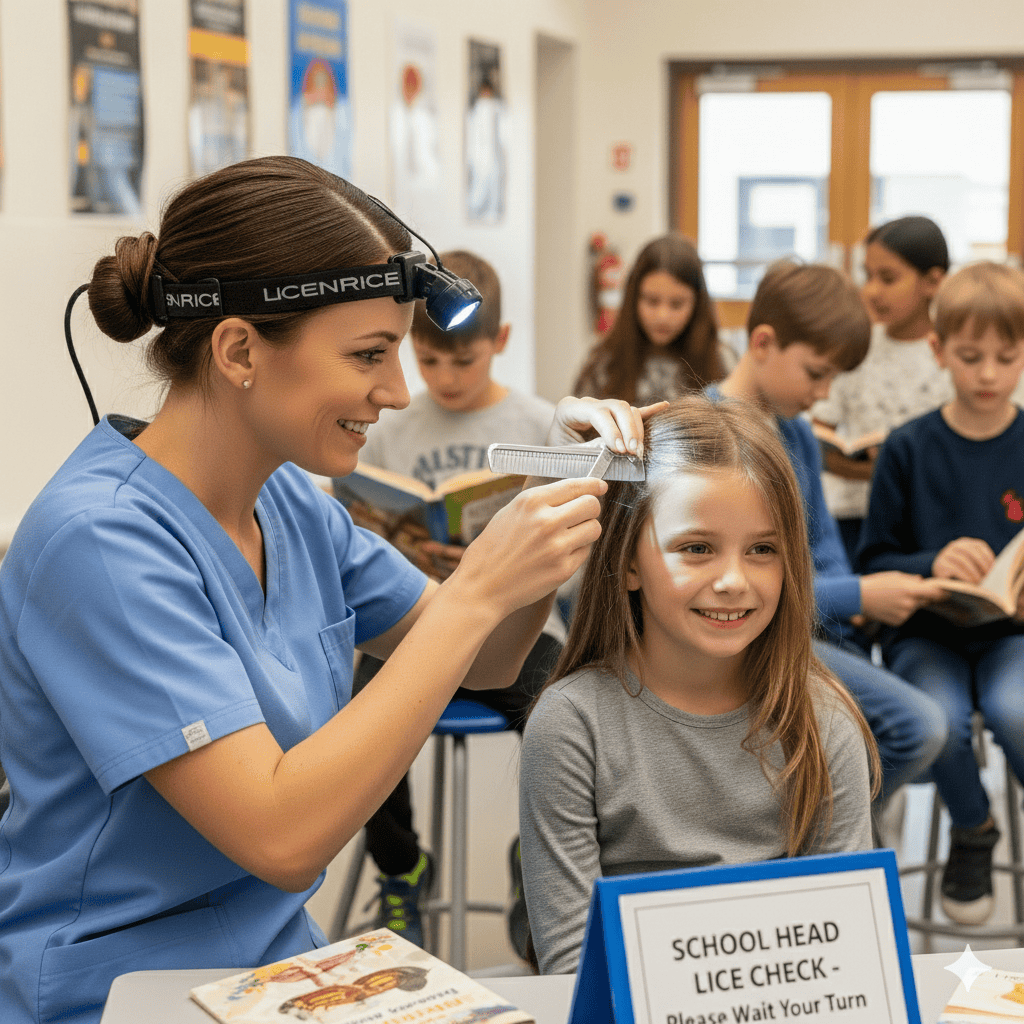
Common Head Lice Policies in Schools
Schools handle head lice in a few different ways, and understanding the approach your district uses helps reduce confusion and keeps students in class whenever possible.
No-Nit Policy
Students must be free of both lice and nits (eggs) before returning. This approach is designed to stop lice quickly, though it may keep children out of school longer, which is a key reason why many schools are moving away from it.
Live Lice Only Policy
Students may return once all live lice are gone. Remaining nits are typically allowed, as the case is considered inactive once bugs are eliminated since live bugs are what can be easily shared with other students through head-to-head contact.
No-Exclusion Policy
Students with lice can remain in school as long as parents are notified and treatment is expected to begin as soon as possible. This minimizes missed classroom time and combats the big, bad lice stigma.
Other Policies You Might See
Routine Lice Checks: Some schools conduct regular screenings to catch cases early.
Parent Notification Letters: Many schools send a head lice letter home to families whenever a case is found. These letters often include guidance on treatment, reassurance that lice are common and treatable, and instructions for returning to school.
Combination Approaches: Some districts mix policies, like allowing students with nits to stay while excluding those with live bugs.
Preventing Head Lice in Schools
While you can’t fully prevent lice in schools, there are steps nurses and staff can take to reduce spread:
- Encourage children to avoid head-to-head contact
- Provide fact sheets for families to share accurate information
- Offer combing clinics or distribute free lice combs for schools when possible
- Partner with professional lice clinics for on-site screenings
Communication: Letters & Fact Sheets
Parent communication is one of the most important parts of a school lice protocol. Head lice letters for schools should:
- Notify parents of confirmed cases
- Provide reassurance that lice are common and treatable
- Share steps parents should take at home
- Outline return-to-school requirements
We provide schools with customizable head lice letters, fact sheets, and parent handouts to make communication easier. Reach out for more details!
Professional Head Lice Checks for Schools
School-wide lice checks can stop an outbreak before it grows. Partnering with a local lice clinic ensures:
- Quick, discreet head checks for students and staff
- Same-day results with professional treatment options if lice are found
- Fewer missed school days and less disruption in the classroom
Extra Support for Nurses & Staff
We understand that dealing with lice isn’t what school nurses signed up for. That’s why our clinics provide:
- Training resources on lice identification
- Head lice advice for schools, including protocols and guidance
- Free templates for lice fact sheets, parent letters, and return-to-school notes
- Access to affordable or free head lice combs for schools in need